

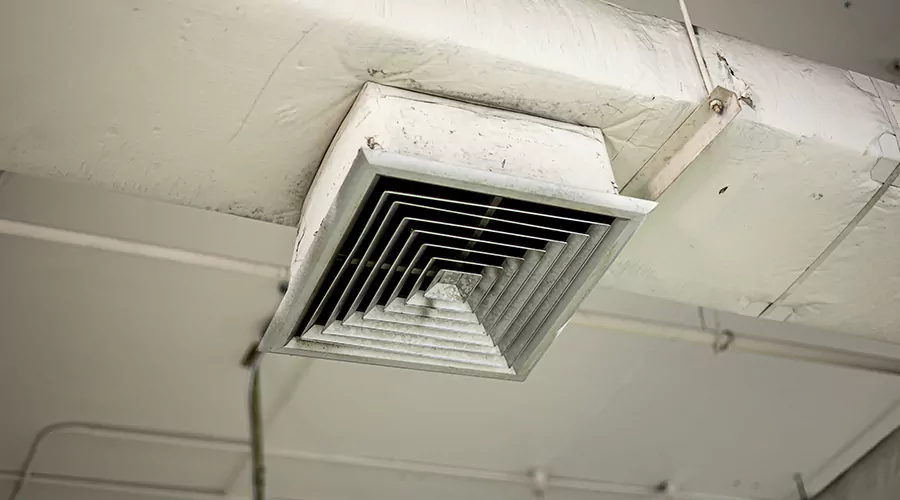
Black soot from air conditioner vents is often caused by fine airborne particles produced by candles, cooking smoke or other indoor combustion sources. These particles can circulate through the HVAC system and settle on vent covers or nearby surfaces. However, dark staining is not always soot. Household dust and moisture-related contamination can create similar marks, making it important to identify the material before choosing a solution.
A central air conditioner does not normally produce combustion soot because its cooling process does not burn fuel. Instead, the HVAC system may carry particles that originate elsewhere in the home. When these particles accumulate around supply openings, they can form dark streaks that appear to be coming from the vents. In homes with fuel-burning heating equipment, unusual black deposits may also indicate a more serious problem that requires prompt investigation.
What Causes Black Soot Around Air Conditioner Vents?
Black deposits develop when airborne particles collect on vent covers or surrounding surfaces. The particles may originate from indoor smoke sources or accumulate because of airflow patterns and moisture. Determining the cause requires looking at where the staining appears and whether other surfaces in the home are affected.
Burning Candles Indoors
Candles can produce soot when combustion is incomplete, particularly when a flame burns unevenly or releases visible smoke. The resulting particles are small enough to remain suspended in indoor air and may spread throughout the home as the HVAC system operates. Over time, these particles can settle around air vents and on other surfaces. Homes where candles are frequently burned may develop black staining in multiple rooms, especially when ventilation is limited. Reducing candle use can help determine whether this activity is contributing to recurring deposits.
Smoke From Cooking
Cooking can generate smoke and airborne particles when food burns or oils reach high temperatures. Without effective kitchen ventilation, some of these particles may spread into surrounding rooms and enter the HVAC return airflow. The system can then circulate a portion of the material throughout connected living spaces. Repeated exposure may contribute to dark deposits near vent openings or on nearby walls. Using a kitchen exhaust fan that vents outdoors can help reduce the amount of cooking-related material circulating through the home.
Fireplaces and Wood-Burning Appliances
Wood-burning fireplaces produce smoke containing fine particles that can settle on indoor surfaces. When a fireplace does not draft properly, some of the smoke may enter the living space instead of leaving through the chimney. These particles can travel beyond the room containing the fireplace and collect around HVAC openings. A pattern of dark staining that appears after fireplace use may suggest an ongoing smoke source. Visible smoke entering occupied rooms should be investigated because the problem can involve ventilation or chimney conditions.
Problems With Fuel-Burning Heating Equipment
Some residential HVAC systems use the same blower and ductwork for both air conditioning and a gas or oil furnace. Under normal conditions, the heating equipment keeps combustion products separate from the air circulating through the home. A malfunction affecting combustion or venting can create dangerous conditions and may sometimes be accompanied by soot near the equipment. Black deposits around furnace components therefore deserve particular attention. Any suspected combustion problem should be evaluated promptly rather than treated as ordinary household dust.
Dust Collecting Along Airflow Paths
Black staining around a vent does not always come from combustion. Fine household dust can gradually collect on nearby ceilings or walls where conditioned air moves across the surface. As particles accumulate in the same locations, they may form dark streaks that resemble soot. This process is sometimes described as air filtration staining or thermal tracking. The pattern commonly follows the direction of airflow and can occur even when the duct interior does not contain substantial debris.
Condensation Around Cold Supply Vents
During cooling operation, a supply grille can become colder than the surrounding room air. When humid air contacts a sufficiently cold surface, condensation may develop and cause airborne particles to stick more easily. Over time, the combination of moisture and dust can produce dark deposits around the grille or nearby paint. Persistent dampness can also create conditions that support biological growth on suitable materials. Because appearance alone cannot identify mold, the moisture source should be investigated before drawing conclusions about the staining.
Leaking Return Ducts
Damaged return duct connections can draw unfiltered air from attics or crawlspaces into the HVAC system. These spaces may contain accumulated dust and insulation particles that would not normally enter the conditioned living area. Some of this material may be carried toward the filter or settle on HVAC components. Although duct leaks do not create soot, they can contribute to unwanted particles entering the airflow system. Identifying damaged connections is therefore useful when unexplained deposits appear alongside other signs of duct leakage.
How Can You Tell Black Soot From Dust or Mold?
Black deposits can have similar appearances even when their causes are different. Combustion soot often forms a fine dark film, while ordinary household dust may appear thicker or contain visible fibers. Moisture-related growth may develop on damp surfaces, but its appearance alone is not a reliable method of identification.
The location and surrounding conditions provide more useful clues than color. Deposits near fuel-burning equipment deserve different attention from dark streaks surrounding a cold ceiling vent. Widespread staining on furniture may suggest airborne particles circulating throughout the home, while isolated damp patches point toward a moisture problem.
| Appearance | Possible Cause | What to Check |
|---|---|---|
| Fine black film on several surfaces | Combustion soot | Recent candle use or indoor smoke |
| Dark streaks around ceiling vents | Airflow-related particle deposits | Staining direction and nearby surfaces |
| Thick gray or black deposits | Household dust | Lint and debris on the grille |
| Dark spots on damp surfaces | Possible biological growth | Condensation and water damage |
| Soot around furnace equipment | Possible combustion problem | Heating equipment and exhaust conditions |
| Black residue throughout the home | Widespread airborne particles | Cooking smoke or other indoor sources |
A wipe test may show that a deposit smears or transfers to a cloth, but this does not reliably identify its composition. Different materials can behave similarly when disturbed. If the staining appears near combustion equipment or substantial contamination is suspected, avoid disturbing the material until the cause has been assessed.
Why Does Black Staining Form Around Vent Edges?
Black staining often develops around vent edges because airflow affects where particles settle. Supply grilles direct conditioned air into the room, but some of that air may travel along nearby walls or ceilings. Small particles can collect where the airflow interacts with these surfaces, gradually forming visible streaks. The pattern may look as though soot is leaving the vent even when the material originates from the surrounding room air.
Surface temperature can also influence the buildup. Cold metal grilles may collect condensation during humid conditions, making it easier for particles to remain attached. Rough ceiling paint can trap additional material because its texture provides small spaces where dust accumulates. These conditions explain why two vents connected to the same system may develop different amounts of dark staining.
The location of the deposit is therefore important. A black outline around the grille suggests a different pattern from loose particles visibly blowing into the room. Observing when the staining develops and whether it returns after cleaning can help determine the next step.
What Are the Warning Signs of a Serious Black Soot Problem?
Some black deposits are primarily a cleaning concern, but others may indicate active smoke exposure or problems with fuel-burning equipment. Sudden staining becomes more concerning when it appears alongside unusual odors or visible soot near a furnace. These conditions should be assessed based on their potential safety implications rather than the amount of staining alone.
Important warning signs include:
- Black deposits appear suddenly around several HVAC openings.
- Dark particles visibly blow into rooms when the system operates.
- Soot accumulates near a furnace or its exhaust connections.
- A persistent smoke or burning odor occurs during HVAC operation.
- Fuel-burning equipment shows unusual operating behavior.
- Black staining quickly returns after cleaning.
- Condensation or moisture damage develops around affected vents.
- Similar black deposits appear on furniture away from HVAC openings.
- Smoke enters the home during fireplace or heating equipment operation.
- A carbon monoxide alarm activates.
Carbon monoxide deserves special attention because it cannot be detected by appearance or smell. Black soot does not confirm carbon monoxide exposure, and the absence of soot does not rule it out. If a carbon monoxide alarm activates, leave the building immediately and contact emergency services. Suspected combustion exposure accompanied by symptoms such as headache or dizziness also requires urgent medical attention.
Can Black Soot Damage an Air Conditioner?
Airborne particles can affect HVAC performance when they accumulate heavily on filters or internal components. The severity depends on where the material collects and whether airflow becomes restricted. Black staining on the outside of a vent does not automatically mean the air conditioner is damaged, but substantial particle buildup inside the equipment may require attention.
Air Filter Contamination
HVAC filters capture some of the airborne particles moving through the system. When indoor smoke increases the particle load, the filter may become dirty sooner than expected and develop greater airflow resistance. A heavily loaded filter can reduce the amount of air moving through the equipment and should be replaced according to its condition and the manufacturer's recommendations. However, changing the filter does not eliminate an active source of combustion particles. The source must also be controlled to prevent the same problem from recurring.
Evaporator Coil Buildup
Particles that bypass filtration can collect on the evaporator coil, which removes heat from indoor air during cooling. Heavy deposits may interfere with heat transfer or restrict airflow through the coil. The resulting performance problems can include longer cooling cycles and reduced system efficiency. Because evaporator coils contain delicate fins, aggressive cleaning with ordinary household tools can damage the equipment. The amount and type of contamination should be assessed before deciding on a suitable cleaning method.
Blower and Duct Deposits
The blower wheel and nearby HVAC components can accumulate particles over time, particularly when filtration is ineffective or indoor particle levels are unusually high. Heavy buildup on the blower may affect airflow performance, while some material can settle inside ducts. Not every deposit will move back into occupied rooms, and visible staining at an outlet does not prove that the entire duct system is contaminated. The condition of the actual components should determine whether cleaning or repairs are necessary.
How Much Does Black Soot Cleanup Cost in 2026?
The cost of addressing black deposits depends on the actual cause and the extent of the affected area. Light staining from household particles may require only ordinary surface cleaning, while damaged ductwork or significant contamination can involve more extensive work. Problems associated with fuel-burning appliances require equipment-specific diagnosis before a reliable repair estimate can be provided.
| Condition | Possible Action | Estimated 2026 Cost |
|---|---|---|
| Light surface staining | Clean accessible grilles and surfaces | Basic household cleaning supplies |
| Suspected duct leakage | Perform duct leakage testing | $115 to $450 |
| Damaged duct sections | Repair affected ductwork | $200 to $2,100 |
| Significant duct contamination | Evaluate whole-system cleaning | $271 to $509 |
| Faulty fuel-burning equipment | Diagnose and repair the appliance | Depends on the identified fault |
These are broad U.S. cost benchmarks rather than guaranteed prices for a specific home. Actual expenses depend on equipment condition and the amount of work required. Repeatedly paying to remove surface staining may provide little benefit if the original smoke source or moisture problem remains unresolved.
How Can You Check Black Deposits Around AC Vents?
A basic visual inspection can help identify where black material appears and whether it may be associated with an indoor particle source. The inspection should focus on observing accessible surfaces rather than opening heating equipment or disturbing substantial deposits. Do not proceed with household checks if there is active smoke, a suspected gas leak or an activated carbon monoxide alarm.
Follow these steps when there is no immediate safety concern:
- Photograph the affected vents. Record where the deposits appear and whether they involve supply or return openings.
- Inspect surrounding surfaces. Look for similar black material on ceilings and furniture in nearby rooms.
- Review recent indoor activities. Consider whether candles or cooking smoke may have increased airborne particles.
- Check the HVAC filter. Turn off the system and examine the filter for unusual dark loading or poor installation.
- Look for moisture. Inspect the grille and surrounding paint for condensation or water staining.
- Clean a small accessible area if safe. Use a suitable damp cloth without spraying cleaning products into the ductwork.
- Monitor the result. Observe whether the staining returns after reducing suspected indoor particle sources.
This process may help identify a pattern, but it cannot determine the chemical composition of black material. A darkened filter may show that particles have been collected without identifying where they originated. If the deposits return quickly or appear near fuel-burning equipment, further investigation is more appropriate than repeated surface cleaning.
When Should You Call an HVAC Professional?
Professional inspection is necessary when black deposits occur alongside suspected combustion problems or repeated particle discharge. Soot near a furnace or persistent smoke odors should not be treated as routine household dust. Qualified technicians can inspect combustion equipment and ventilation components that should not be handled during ordinary household maintenance.
A heating technician may examine fuel-burning equipment to evaluate combustion and exhaust conditions. These checks can help identify failures that could allow harmful combustion products to enter occupied spaces. Suspected equipment faults should be addressed promptly because cleaning the visible staining will not correct a dangerous heating problem.
If the concern involves recurring deposits without an obvious smoke source, an HVAC technician can inspect the filter housing and accessible ductwork. Moisture-related staining may require investigation of condensation or damaged insulation. Specialized duct cleaning may be considered when significant internal contamination is confirmed, but the source should be corrected first to reduce the likelihood of recurrence.
How Can You Prevent Black Soot Around Air Conditioner Vents?
Reducing black deposits begins with controlling the sources of airborne particles inside the home. Indoor combustion is particularly relevant because fine soot can travel through rooms before settling on surfaces. Proper filtration and moisture management can also help reduce other types of dark staining around HVAC openings.
Reduce Indoor Smoke Sources
Limit activities that produce visible smoke inside occupied rooms, especially when black deposits have repeatedly appeared around air vents. Candles can contribute to soot accumulation during incomplete combustion, so flameless alternatives may be useful when recurring staining is a concern. Cooking smoke should be removed with appropriate ventilation rather than allowed to spread through the house. When possible, use an exhaust fan that vents outdoors because recirculating air alone may not remove all combustion-related particles.
Maintain Fuel-Burning Heating Equipment
Gas and oil heating equipment should receive appropriate periodic maintenance to identify operating problems before they become serious. Annual furnace inspections are a common preventive measure, particularly before the heating season begins. Keep exhaust systems in proper working condition and pay attention to unusual odors or visible soot around the equipment. Carbon monoxide alarms should also be installed and maintained according to local requirements and manufacturer instructions because the gas cannot be detected through ordinary observation.
Check Air Filters and Vent Surfaces
Inspect HVAC filters approximately once a month during heavy system use and replace them when they become loaded or reach the recommended replacement interval. Make sure the filter fits correctly because gaps around its frame allow air to bypass the filtration material. Clean accessible vent covers with methods suitable for their finish, and avoid dry brushing substantial black deposits into the air. If staining repeatedly returns, investigate the source rather than relying on frequent cleaning alone.
Control Moisture Around Supply Vents
Monitor cold supply grilles for recurring condensation, particularly during humid weather. Persistent moisture can hold airborne particles against surfaces and may damage nearby paint or drywall. Maintaining indoor humidity within a reasonable range and correcting water leaks can reduce these conditions. If condensation continues despite ordinary humidity control, the duct insulation or airflow conditions may need further evaluation.
Conclusion
Black soot around air conditioner vents often originates from indoor combustion particles rather than the cooling equipment itself. However, ordinary dust and moisture can produce similar staining. Identifying the source is necessary before choosing cleaning or repair work. Suspected problems with fuel-burning equipment deserve immediate attention. This week, check your vents for recurring black deposits and review possible indoor smoke sources.